[Avg. reading time: 7 minutes]
Data Mesh
What it is
Data Mesh is not a tool.
It’s a way to organize data ownership in large organizations.
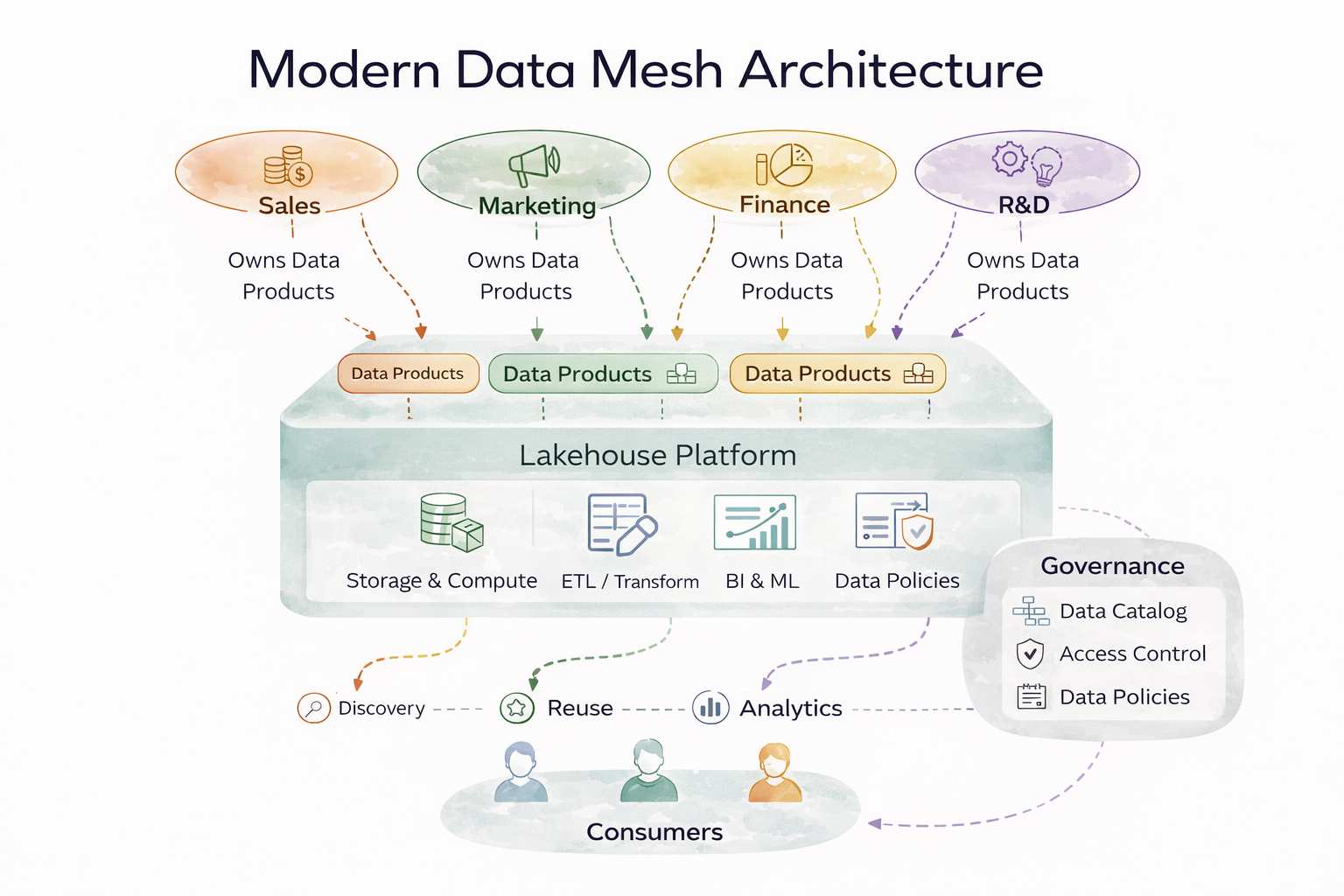
Instead of one central data team owning everything,
each domain owns its own data.
- Finance owns finance data
- Sales owns sales data
- Marketing owns marketing data
Why it exists
Centralized data platforms don’t scale well.
Problems you see:
- One team becomes a bottleneck
- No clear ownership
- Slow delivery
- Constant dependency on data engineers
Data Mesh tries to fix this.
Before vs After
Monolithic Data Platform
- Central team owns everything
- Pipelines become complex and slow
- No clear ownership
- Everyone depends on one team
Data Mesh
- Data is split by domain
- Each team owns their pipelines
- Faster development
- Clear accountability
4 Core Principles
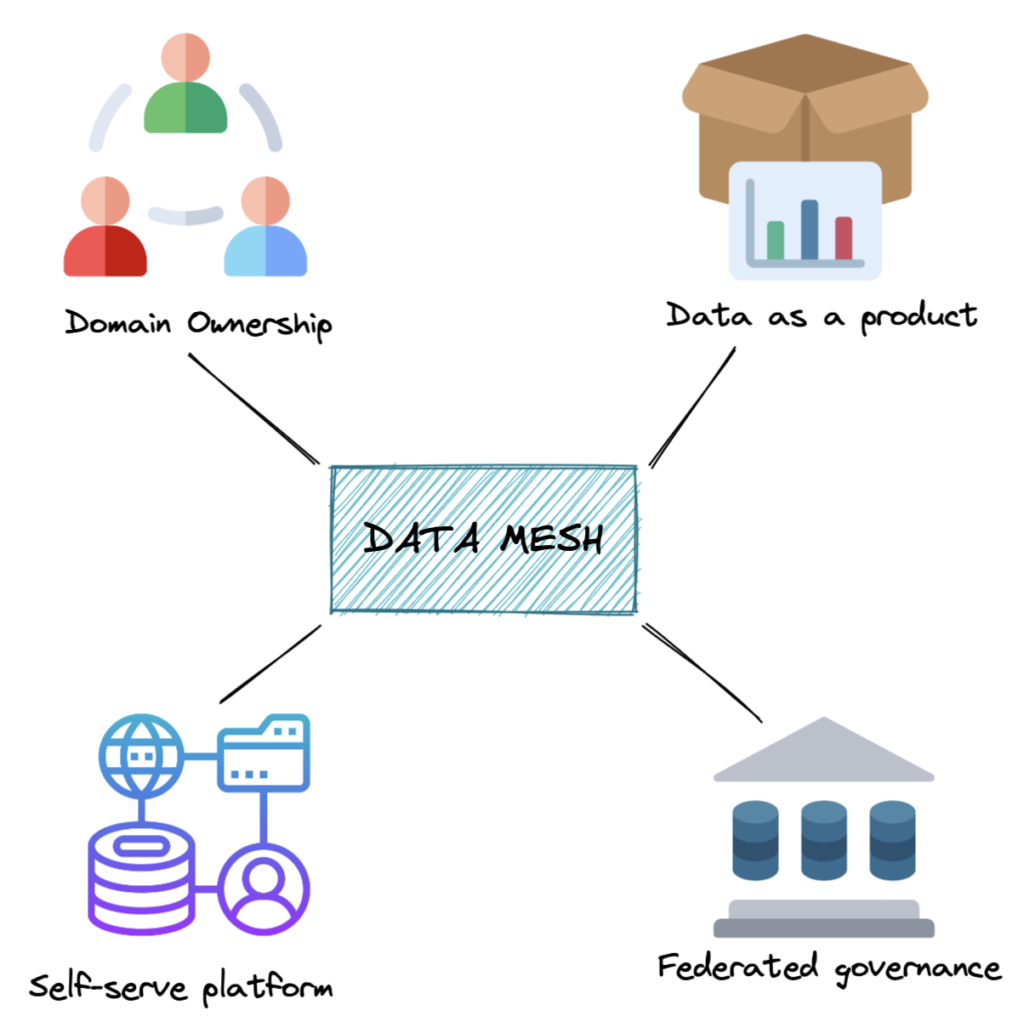
1. Domain Ownership
Each domain team owns:
- Data
- Pipelines
- Quality
You build it, you own it
2. Data as a Product
Data is not just tables.
It must be:
- Discoverable
- Reliable
- Documented
- Easy to use
If nobody can use your data, it’s useless
3. Self-Service Platform
Central team still exists.
But they provide:
- Infrastructure
- Tools
- Standards
Platform team builds the road, domains drive on it
4. Federated Governance
- Global rules (security, compliance)
- Local ownership (domains decide implementation)
Balance control and flexibility
Data Products
A data product is more than a dataset.
It includes:
- Data
- Metadata
- Documentation
- Code / pipelines
- SLAs
Treat data like a product, not a byproduct
Where Data Mesh works well
- Large organizations
- Many independent teams
- High data ownership conflicts
Where it fails
- Small teams (overkill)
- Weak engineering culture
- No governance discipline
- No platform team
Challenges
- Cross-domain joins become painful
- Standards drift across teams
- Requires strong ownership mindset
- More roles - more coordination
- Expensive to implement
Data Mesh is rarely implemented fully.
What most companies do
Most companies do is a Hybrid model
- Central platform (Example: Fabric, Databricks, Snowflake)
-
- Domain ownership (partial Mesh)
To get access to lots of external data.
#datamesh #domainownership #selfservice
1: https://www.dremio.com/resources/guides/what-is-a-data-mesh/